Q: What do you want residents to understand about how paid parking revenues are being used?
A: The dollars that we are raising in the paid parking is not going into the general fund. It is going into a lock box that can only be spent in the downtown area and the waterfront to fix the downtown and the waterfront. It can’t be used for street resurfacing at the beaches. It can’t go for stormwater or someone else’s street. It can only be used for the downtown infrastructure and the waterfront. We are saying that until we’re blue in the face.
After two months of operation — the first of which was a grace period where no one was ticketed — the city has generated a gross of $327,000, netting over $200,000. Those are dollars that did not come out of our taxpayers’ backs. And these are the dollars that we’re going to start using to fix our downtown.
Q: When you say you want to “fix downtown,” what does that actually mean?
A: That’s literally fixing the electric that’s buried in the ground. That is moving some transformers because they’re inadequate. That’s replacing the light posts. But you can’t just fix the sidewalks. You don’t fix the sidewalks and then have to fix the electric. All this stuff has to be done at the same time. So if you’re digging up a sidewalk to repair all the underground electric conduits, you tear up the sidewalk, fix the conduits, put the conduits back in, and then you put the new sidewalk on. Which is why what we need to do, in order to do this without having a construction zone for the next 20 years, we have to be able to borrow the necessary dollars to complete the project in a year, year and a half.
Q: What is the long-term financial plan for paid parking revenues?
A: Our goal is to try to raise $2 million with the paid parking. And that $2 million would allow us to borrow $30 million over the next 20 years, and that $2 million a year would then pay back that loan to fix our downtown and the waterfront. We have not borrowed $30 million. We have not borrowed any money. What we have done is borrow a $7 million line of credit to support taking down and fixing that section. It takes two years of demonstrating to a bank that this is a valid revenue stream before we can borrow against it. So this is what we call the start. It’s not the finish.
Q: What would you say to residents who argue the city should wait on these improvements?
A: Nothing is getting cheaper. Concrete’s more expensive, piping’s more expensive. And if you think ignoring the sidewalks and those brick walls and the trees that are heaving all this — if you think waiting another five years is going to make it cheaper — you’re just kidding yourself. Thirteen years ago it was going to cost $165,000 to open up Alachua. We spent $1.79 million this year to open up Alachua. All we’re trying to do is fix the town that’s been neglected for 50 years. And what won’t kill your business is a cute, and beautiful, and vibrant, and well-decorated downtown. That, my friends, is what is going to save your businesses and enhance your businesses.
Q: How does your experience as a commissioner shape how you approach decisions that may not be popular?
A: I have never run and been an elected official that cared about getting reelected. I never have. Which is why I never got reelected. But we got things done. And when that library got done, we have something like 700 people on average a day come visit that library. When we fix the downtown, people will forget about all of this and they’ll say, finally, the sidewalks look nice, the vegetation looks nice, the streetlights are working. This commission is looking not for the next election. We are looking for the next 20 and 30 years down the road and how we make our community better. I believe in what I do. I wouldn’t change a thing. I love this community. I really do.
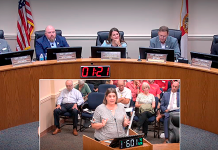
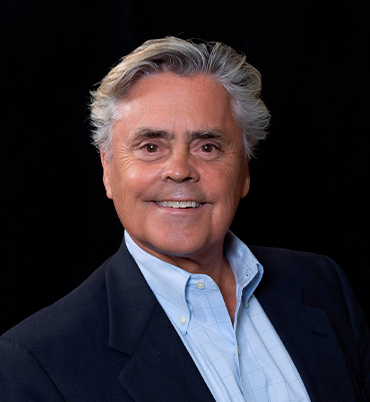
Tim Poynter serves as a City Commissioner for Fernandina Beach and holds monthly town halls at City Hall on the fourth Tuesday of each month from 5:30-6:30 p.m. Questions or comments can be directed to him at tpoynter@fbfl.city or 904-415-6533.