By Tracy McCormick-Dishman
The next time you slurp an oyster at a local raw bar, the shell could end up back in the water, helping to grow the next generation of oysters.
That is the goal of Jax Oyster Conservation, a new nonprofit that collects oyster shells from seafood restaurants in Jacksonville and the Beaches and uses them to restore oyster reefs and shorelines in Northeast Florida.
Founder and director Hunter Mathews, who was born and raised in Jacksonville and has lived in Ponte Vedra and Atlantic Beach, said the idea grew out of his graduate research at the University of North Florida. Other parts of Florida and the Atlantic Coast already had programs to recycle shells and rebuild reefs. Jacksonville didn’t.
“We’re not reinventing the wheel,” Mathews said. “We are modeled after a lot of those other big, popular programs throughout Florida and the Atlantic Coast.”
Mathews got his first real look at the world of oysters while interning and working at the Guana Tolomato Matanzas National Estuarine Research Reserve in Ponte Vedra Beach. After a stint with a conservation nonprofit in California, he came back to Jacksonville for graduate school at UNF. There, his adviser, Kelly Smith, had helped develop a new structure for restoring oyster reefs and brought him in to help study it.
Mathews, Smith and fellow UNF graduate student Silas Tanner formed the board, and Jax Oyster Conservation became a 501(c)(3) nonprofit in 2024.
Why oysters matter
Like coral reefs, oyster reefs have been disappearing. Mathews said more than 90% of the world’s oyster reef cover has been lost, largely because of past overharvesting, when shells were taken from rivers but never put back, along with disease and changes in water quality.
That’s a bigger deal than it sounds. Scientists call oysters a keystone species because so much depends on them. Their reefs shelter fish and crabs, protect salt marshes from erosion and help clean the water. According to the St. Johns Riverkeeper, a single adult oyster can filter up to 50 gallons of water a day.
Despite the shells that wash up on the beach, these oysters don’t live in the ocean. Currents carry the shells there. They grow in the slightly fresher water of the Intracoastal Waterway and its tributaries, and up the St. Johns River to the Arlington River area.
A better reef
Why use old shells? Young oysters drift around looking for a place to settle, and shells give off a chemical signal that draws them in, Mathews said.
For years, the go-to method was stuffing shells into plastic mesh bags, like the ones oysters come in by the bushel. Around here, those haven’t held up.
“The bags break down from the sun and they also shift around with wave energy,” Mathews said. “We have really energetic river systems up here.”
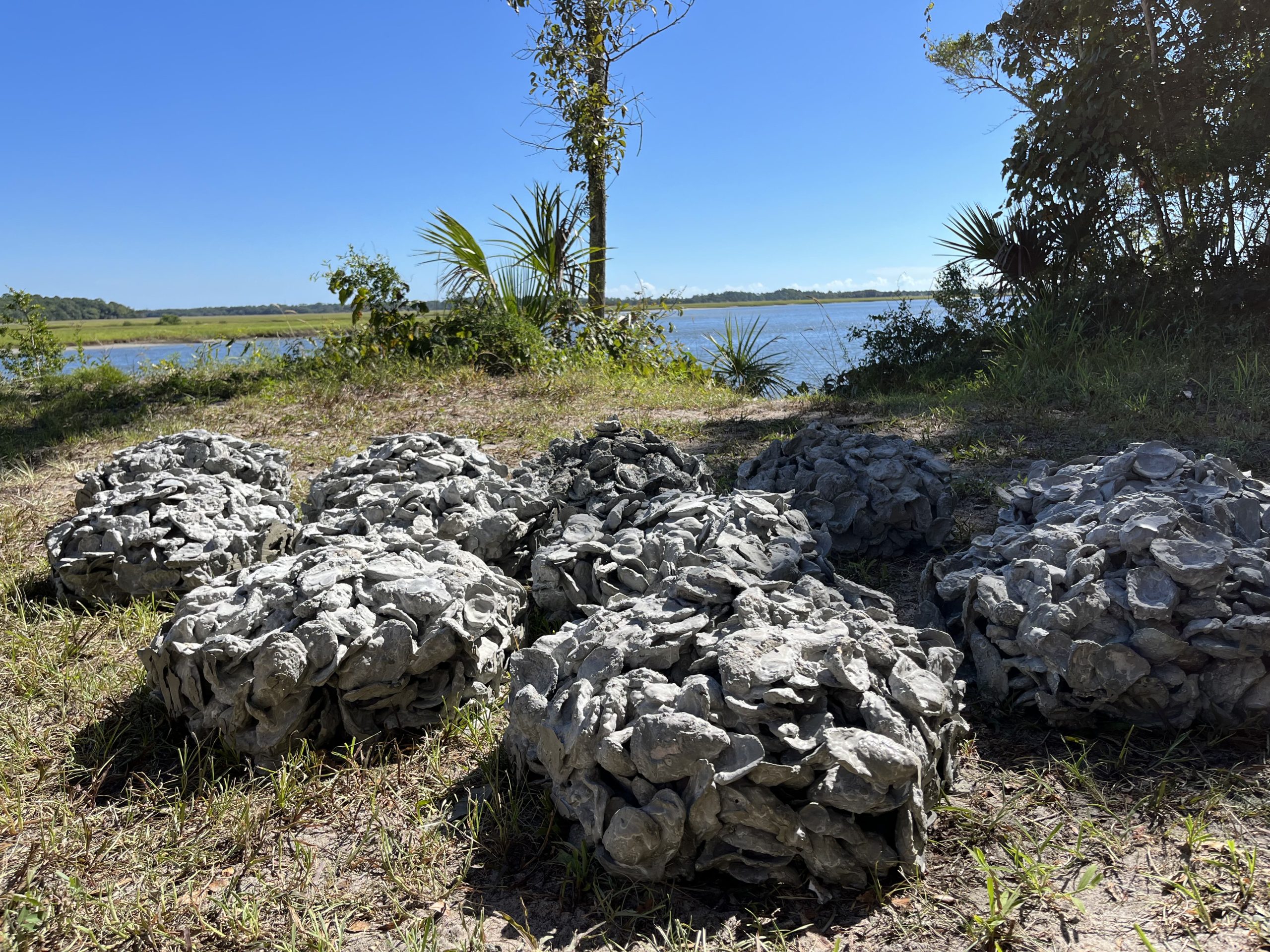
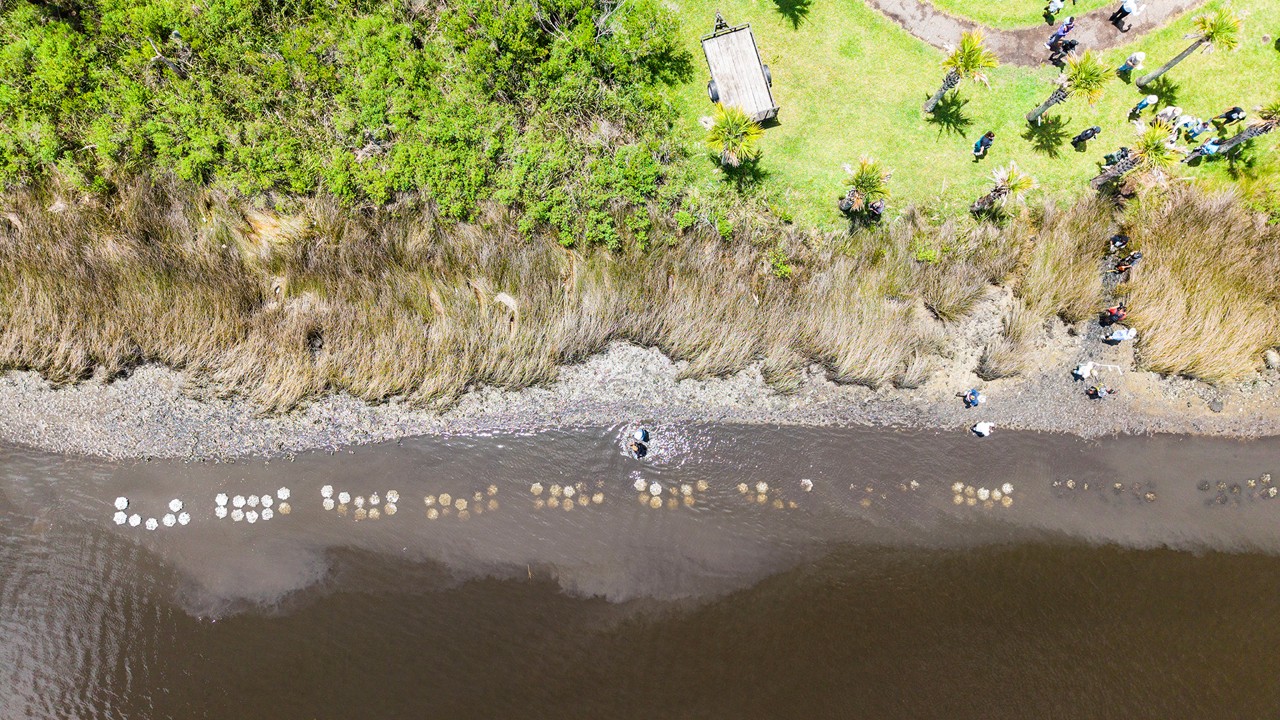
The group builds what it calls POSH, short for Pervious Oyster Shell Habitats: clumps of recycled shell held together with just a little cement. There’s no plastic, and they’re full of nooks that let water flow through. That helps the oysters feed and gives crabs and small fish a place to hide.
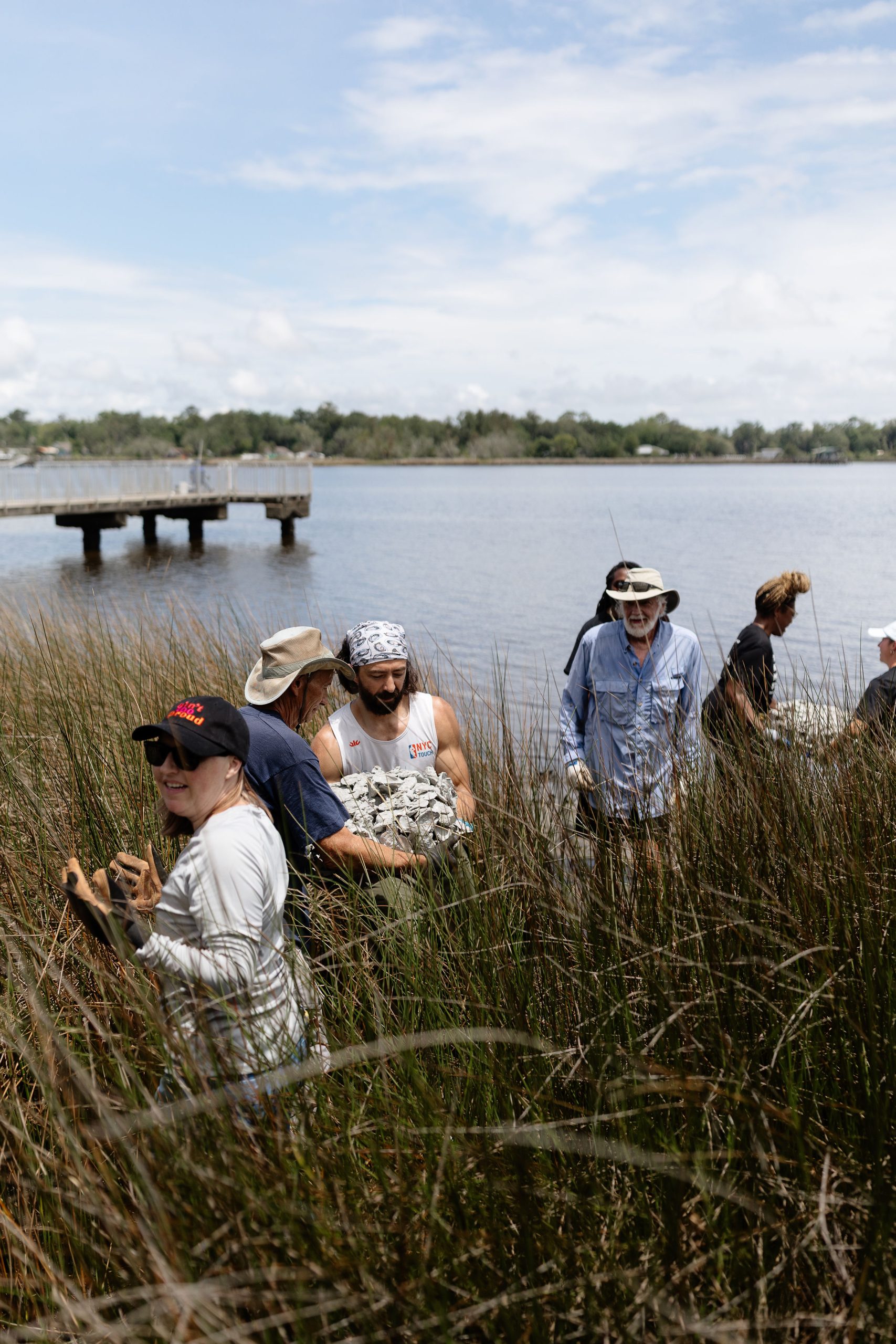
At Riverview Park on the Trout River, volunteers have set 130 of them along the shoreline in two rounds so far. The plan calls for 240.
Give one about two years in the water, and it’s covered.
“You can’t even see the cement or anything,” Mathews said. “Just live oysters.”
Getting started
Finding a place to keep all those shells held the group up for a while, until the city of Jacksonville offered a piece of land. The group recycles shells from restaurants at the Beaches and has partnered with a local composting company that collects shells from a few restaurants in town.
For now, the focus is Jacksonville and the Beaches. Within five to 10 years, Mathews would like to reach Fernandina Beach, Ponte Vedra and St. Augustine.
How to help
Volunteers can sign up for the email list to hear about upcoming workdays building modules and setting them in the river. Hosting an oyster roast? Fill out the form on the Recycle With Us page, and the group will figure out how to get your shells. Public drop-off spots are on the wish list.
Donations can be made online, and an Adopt-a-Reef program is in the works for people and businesses who want to pay for a restoration site.
For more information, visit jaxoysterconservation.org.