By Debi Lander
Returning to Notre-Dame Cathedral in Paris this October, I found myself thinking about something travelers seldom put on an itinerary: gratitude. I had come to revisit a familiar landmark and photograph its restored beauty. But standing inside, I understood that simply being able to enter was something to appreciate. I’d been back to Paris in 2022, but then the doors were closed.
On April 15, 2019, fire swept through the cathedral’s roof. The spire collapsed, and television images carried the disaster around the world. Even people who had never visited Paris recognized the enormity of the loss. A building that seemed permanent suddenly looked vulnerable.
Now, after years of painstaking work, visitors can once again walk beneath its soaring vaults. Notre-Dame reopened in December 2024, reclaiming its place as both a working church and one of the world’s great cultural treasures. Returning nearly two years later, I considered what had been saved.
The interior’s brightness is striking, almost too clean to my eyes. Historian Jean-Michel Leniaud suggests four decades of grime and condensation could restore the familiar gray. For now, cleaned stone reveals details that once receded into shadow. Looking upward, I admired the height and graceful lines, then turned my attention to smaller things: sculpture, sacred objects and the altar. Some 2,000 statues and decorative features were restored or re-created. Photographs told only part of the story.
I paused before the Virgin and Child, known as Our Lady of Paris. The sacred statue survived the fire intact, and its presence offered a connection between the cathedral I remembered and the one before me. Here was something familiar within a renewed setting, a reminder that restoration involves preserving meaning as well as repairing damage.
Throughout my visit, I thought about the 2,000 workers responsible for making this return possible. Firefighters saved the main structure while others helped rescue precious objects. Later came architects, carpenters, stonemasons, conservators and other specialists. Donors contributed, and craftspeople brought knowledge that no amount of money alone could replace.
The rebuilt roof framework, using about 2,400 oak trees, is especially remarkable. Carpenters used traditional tools and techniques to reproduce the historic structure, joining present-day effort with skills passed down through generations. Much of that work remains above visitors’ heads, out of sight, yet essential to everything below.
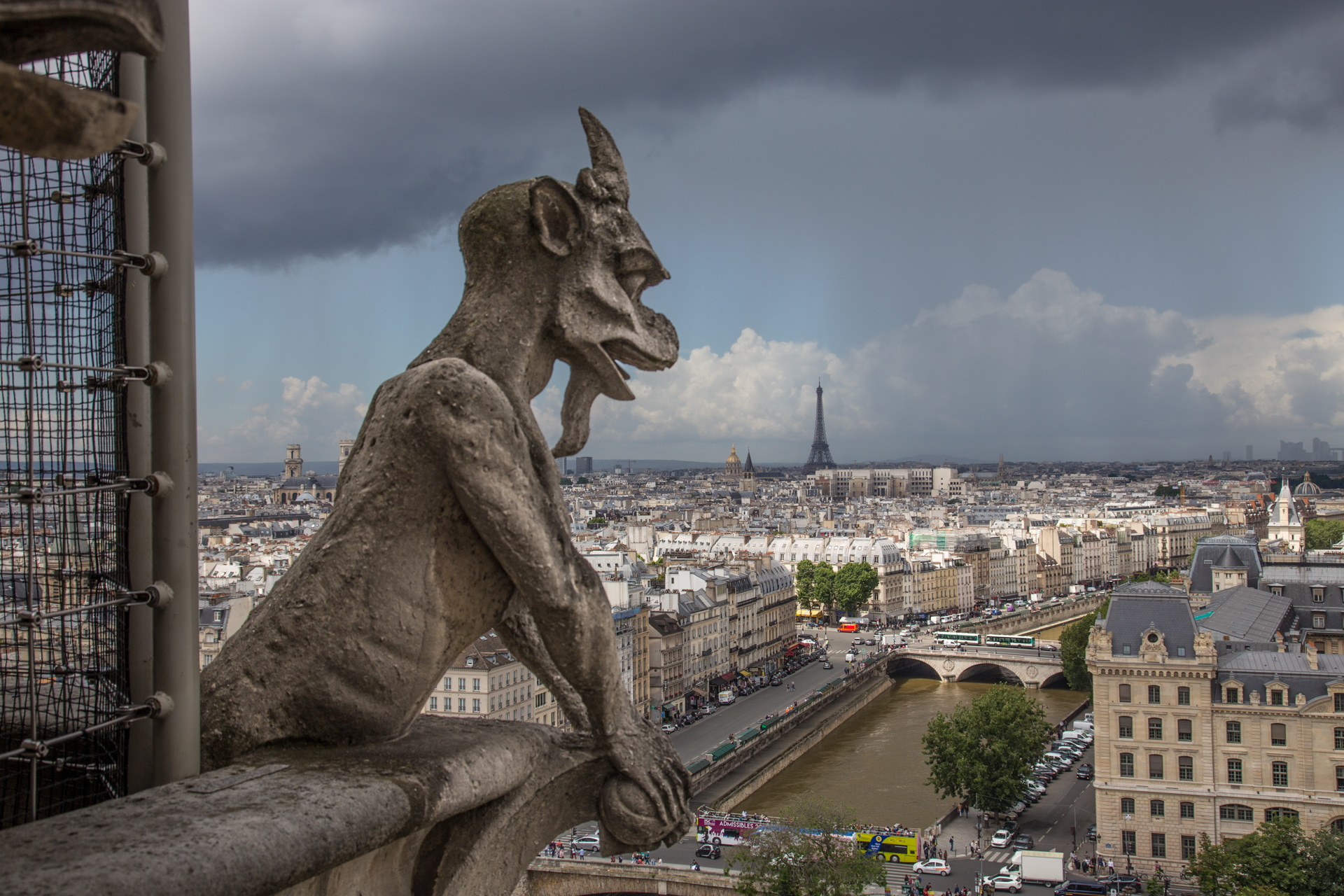
High around the towers, the cathedral’s fantastical stone creatures still keep watch over Paris. Often called gargoyles, the decorative figures are more properly known as chimeras; true gargoyles drain rainwater. I climbed the towers on previous visits, and these creatures feature in some of my fondest memories. This time, I wasn’t able to climb, but took comfort in knowing those familiar guardians remain.
For Paris, Notre-Dame’s restoration carries significance far beyond tourism. On the Île de la Cité, surrounded by the Seine, the cathedral belongs to the city’s daily landscape and more than 800 years of history. Its familiar silhouette helps define Paris.
For visitors, it offers something no screen can convey: the building’s scale, the light within it and its serene spirituality. You need not be Catholic, or even religious, to appreciate the human achievement surrounding you. Each person brings a different reason for entering.
As Thanksgiving approaches, I am grateful to the people I will never meet whose work brought me back through those doors. Because of them, another traveler will enter for the first time and look up in amazement. I left with photographs and the privilege of a second look. This November, that is the gift I will remember when I count my blessings.
Debi Lander is an award-winning travel writer and photographer who blends her passion for history, culture, food, and personal discovery into captivating stories. Through her website Bylandersea.com and her long-running travel column for Florida Newsline, she explores destinations from small U.S. towns to iconic global landmarks. She hopes her storytelling and practical insights inspire readers to experience the world with curiosity, appreciation, and a sense of adventure. Debi can be reached by email to mail@floridanewsline.com.