NewsLine staff
The William Bartram Scenic and Historic Highway, our 17-mile-long State Road 13 along the St. Johns River from Julington Creek south to Wards Creek, has become the first scenic byway recognized by Homegrown National Park, according to a recent release. The partnership encourages residents, businesses, schools and community groups to play a direct role by planting native species and reducing invasive plants across the broader byway corridor.
Named for 18th-century naturalist William Bartram, who documented the region’s rich plant and animal life, the byway provides a fitting setting for this work, a recent release stated. Organizers say the goal is not large-scale transformation overnight, but steady, achievable progress driven by local participation.
Rather than focusing solely on roadside improvements, the effort extends into neighborhoods and shared spaces, noted a recent release. Participants are invited to register their projects on Homegrown National Park’s Biodiversity Map, contributing to a connected network of habitats that support birds, pollinators and other wildlife.
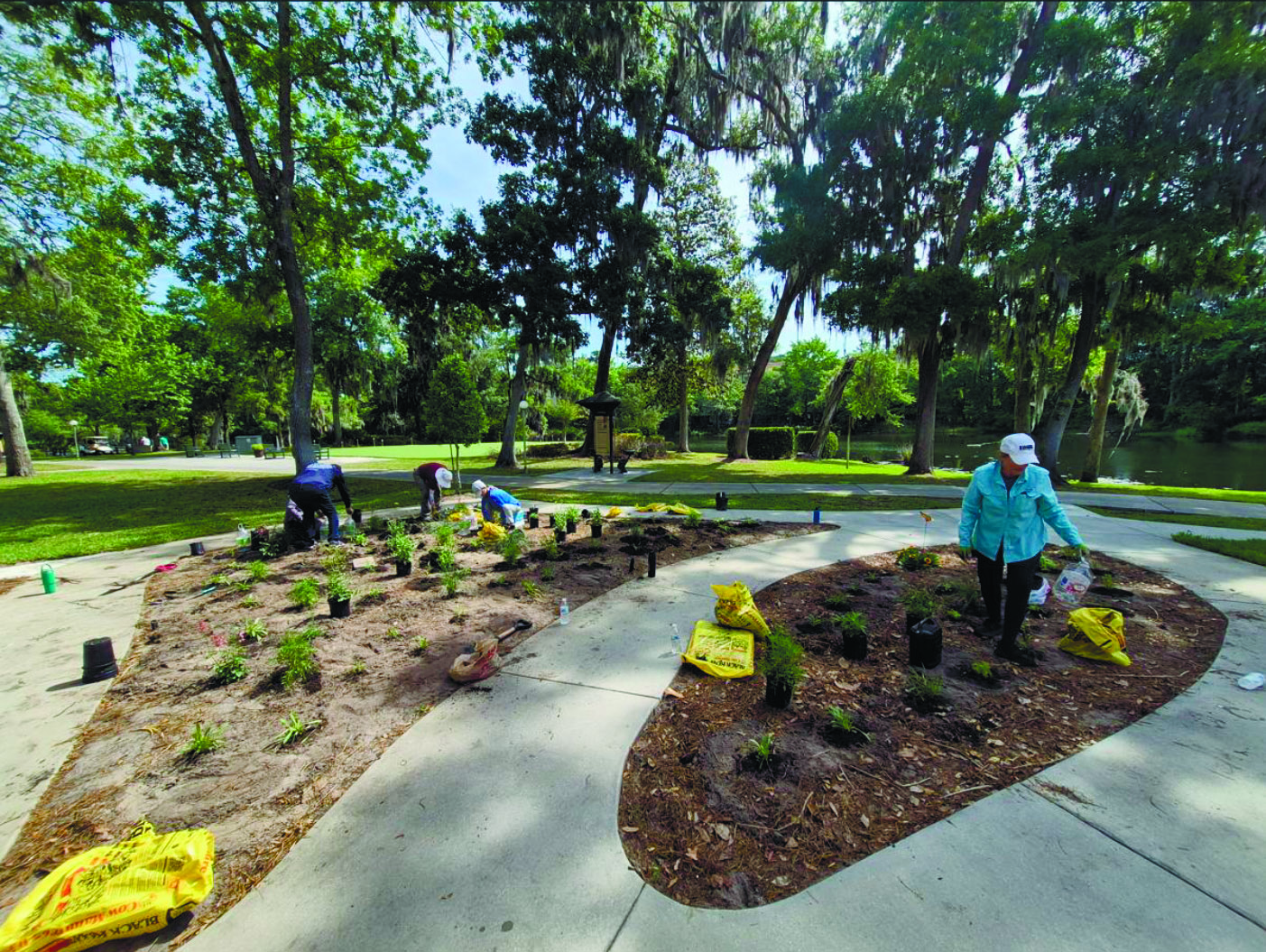
The initiative is already moving from concept to action, a recent release explained. On May 6, residents and local master gardeners installed the first native plant demonstration garden at Westminster Woods on Julington Creek, offering a visible example of how small-scale efforts can be replicated across the community.
“With a national organization called Homegrown National Park, Westminster and the Bartram Scenic and Historic Highway partnered to complete a native plant garden, thus qualifying Westminster as a ‘national park’ — a Homegrown National Park,” said Joe McAnarney, chair of the William Bartram Scenic and Historic Highway, in a recent release. “Over a period of time, the Scenic Highway has a goal of creating gardens all along its 17-mile length, such that this will also become the William Bartram Scenic and Historic Homegrown National Park.”
As interest in nature-based solutions continues to grow, the partnership offers a relatable story of how everyday landscapes, when connected, can support healthier ecosystems, per a recent release.
Learn more: https://homegrownnationalpark.org and https://bartramscenichighway.com